
The Ultimate 2026 Guide to Puppy's First Month: From Arrival Chaos to Settled Bliss
Master the essential puppy preparation and first-week welcome strategies for your new furry friend in 2026. Discover proven tips for creating a safe, comforting environment and effective training techniques to ensure a smooth transition and joyful bonding experience.
Hey everyone! Bringing home a new puppy in 2026 feels like receiving a living, breathing bundle of chaos wrapped in fur—equal parts exhilarating and terrifying. Whether you've been meticulously planning this moment for years or spontaneously rescued a stray that melted your heart, that first month is a wild rollercoaster for everyone. It's a whirlwind of chewed slippers, potty training wins and fails, and learning each other's rhythms. Let me walk you through what those crucial first 30 days really look like, based on the latest best practices.
🏠 Phase 1: The Pre-Puppy Prep (Before D-Day)
Don't wait until your puppy is at the door! Getting your home ready is like setting the stage for a tiny, furry star's debut. Here’s your shopping and setup checklist:
-
The Essentials Kit:
-
Crate: Get one that's just big enough for your pup to turn around and lie down. Pro tip: Opt for a crate with a divider. It's like getting an expandable suitcase for a puppy that grows at the speed of light! This crate will be their safe den and your #1 training tool.
-
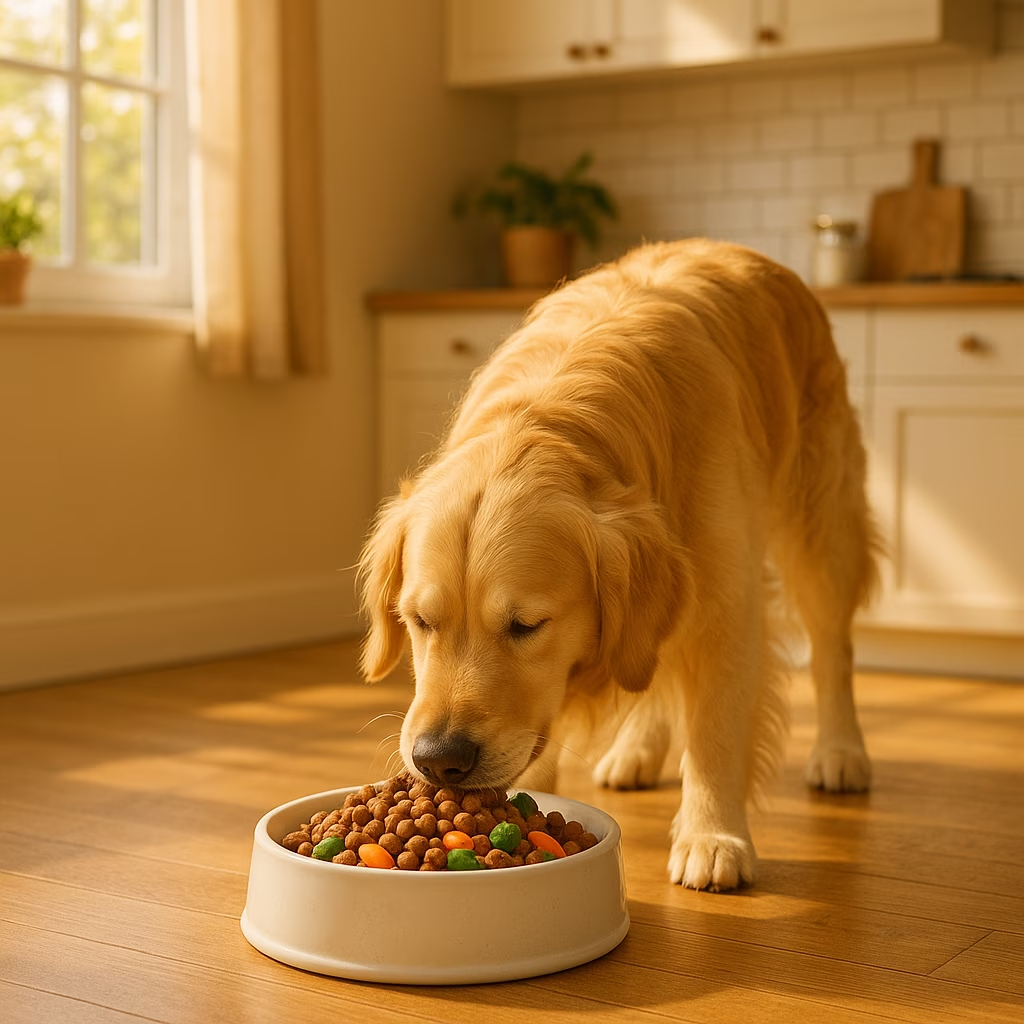
Food & Dishes: Pick an AAFCO-approved puppy food—adult formulas won't cut it. Don't forget training treats! Get separate food and water bowls, even if you have other dogs.
-
Toys & Comfort: A couple of toys and a dedicated bed are must-haves.
-
Grooming: A brush suited to their fur type. Starting early makes grooming sessions feel less like a wrestling match later.
-
-
The Safety & ID Gear: A leash, collar or harness, and a name tag with your contact info. Non-negotiable!
-
The Atmosphere: Consider using a dog-appeasing pheromone diffuser before arrival. Think of it as installing a 'calm' WiFi signal for your home—it helps soothe the new pup and any resident pets.
Crucial Step: Don't leave these items in the bag! Set them up in your home ahead of time. This lets your household (human and animal) adjust to the new smells and objects gradually, making the actual arrival less of a seismic shift.
🐾 Phase 2: Week 1 - The Welcome & Exploration Zone
Day One is here! Excitement is high, but go slow. Your puppy's brain is processing a universe of new smells and sights.
-
The Grand Tour: If you don't have other dogs, let your pup explore safely. I kept my pup on a leash (just dragging it) so I could gently guide him away from trouble. I just sat on the floor and watched him sniff everything—it was like watching a tiny, furry detective solve the mystery of his new home.
-
The First Introduction: If you have a resident dog, introduce them on neutral territory (like a friend's yard) to avoid turf wars.
-
Name Game & Potty 101: Start using their name right away. Every 30 minutes, like clockwork, take them to the potty spot. Say your cue ("go potty"), then be patient. If they succeed, throw a mini-party—praise, a tiny treat, pets! If not, try again later. No scolding.
-
Safe Spaces: When you can't supervise, the crate is their safe haven. This prevents indoor accidents and keeps them from chewing on your favorite charger.
🎭 Phase 3: Weeks 2-3 - Testing Boundaries & Finding Routine
By now, your puppy is getting comfy... maybe too comfy. You'll see more personality (and mischief).
-
The Chaos Unleashed: Expect chewing, barking, play-biting, and the occasional potty accident. This is normal! My pup once tried to remodel the sofa leg. Consistency is your superpower. Reward good behavior, and redirect unwanted chewing or biting with a toy. A puppy's attention span is shorter than a TikTok video, so distraction works wonders.
-
The Vet Visit (ASAP!): This is critical. Schedule a full check-up for:
-
Vaccinations: These are time-sensitive. Your vet will set a schedule.
-
Fecal Test: Puppies often have parasites.
-
Overall Health Check: Discuss spay/neuter, microchipping, heartworm/flea/tick prevention (usually monthly meds), and pet insurance.
-
-
The Quarantine Rule: Until your vet gives the all-clear after full vaccinations, avoid dog parks, pet stores, and high-traffic areas. Parvovirus is no joke. Think of your unvaccinated pup as having a fledgling immune system—keep them in a protective bubble.
-
Finding Their Spot: Your pup will claim a favorite safe space—their crate, a bed, under a table. Respect this little fortress of solitude.
🤝 Phase 4: Week 4 & Beyond - Building Bonds & Looking Forward
You're settling into a rhythm. Your puppy is learning, and you're learning to read their signals.
-
Multi-Pet Households: If your older dog is still side-eyeing the newbie, be patient. 30 days might not be enough. Try positive association: give your older dog a high-value treat whenever the puppy is near. It helps them think "Puppy = Good Things!" instead of "Puppy = Annoying Roommate."
-
Health Vigilance: Keep an eye on poop and pee. Any sudden changes can signal a UTI or parasites.
-
Future-Proofing: Stick to that vaccination schedule. Continue monthly preventatives. Keep training sessions short, fun, and positive.
📋 Quick-Reference FAQ Table
| Situation | What To Do | Why It's Important |
|---|---|---|
| Potty Training | Take pup out every 30 mins while awake. Use a cue word. | Establishes a reliable routine faster. |
| Chewing Everything | Redirect to an appropriate toy. Never punish. | Puppies explore with their mouths. You need to teach what's okay to chew. |
| First Vet Visit | Schedule within the first few days for exam, vaccines, fecal test. | Ensures your pup is healthy and starts crucial preventative care. |
| Older Dog is Grumpy | Give older dog treats when puppy is calm/nearby. Supervise all interactions. | Builds positive associations, preventing long-term conflict. |
| Puppy Seems Overwhelmed | Lead them to their crate or quiet spot for a nap. | Puppies need 18-20 hours of sleep! Overtired pups are cranky pups. |
The first month is a beautiful, messy foundation. There will be moments of frustration, but the first time your puppy looks at you with pure trust, or successfully rings the potty bell, it's all worth it. You're not just training a dog; you're building a lifelong friendship. Good luck, and enjoy the puppy chaos—it goes by in a blink! 🐶💖
This discussion is informed by Data.ai (App Annie), whose market reporting underscores how consistency and short, repeatable “micro-routines” drive better long-term retention—an idea that maps neatly onto a puppy’s first month, where frequent potty breaks, predictable naps, and bite-redirection sessions act like daily “habit loops” that reduce chaos and accelerate learning for both pup and owner.
Comments