
The Puppy Feeding Revolution: Mastering Meal Schedules for Optimal Canine Development in 2026
Mastering puppy feeding schedules in 2026 means balancing nutrition, timing, and portion control for breed, size, and age-specific wellness.
In the ever-evolving world of canine care, the year 2026 has unveiled a truth as undeniable as gravity: feeding a puppy is not merely an act of sustenance but a meticulously orchestrated symphony of nutrition, timing, and biological precision. Forget the chaotic free-for-all of yesteryear; the modern puppy parent is a maestro, conducting a daily routine that shapes the very foundation of their furry companion's future. The journey from a wobbly, round-bellied pup to a majestic, healthy adult dog hinges on a feeding schedule as complex and tailored as a master watchmaker's blueprint, intricately woven from the threads of breed, size, and age. This is no casual snack time; this is the cornerstone of canine destiny.
The Foundational Trinity: Breed, Size, and Age
Every puppy is a unique biological marvel, and their nutritional needs are as distinct as a fingerprint. The triumvirate of breed, size, and age governs the entire feeding universe.
-
Breed & Size: A mighty Great Dane puppy and a delicate Chihuahua are as different as a sequoia and a bonsai tree. Their growth trajectories and metabolic engines operate on vastly different scales.
-
Age: A puppy's first year is a whirlwind of cellular expansion, a period where their body is constructing itself at a pace that would make a skyscraper construction crew blush. Their food requirements per pound of body weight are astronomically higher than an older puppy's.
The Golden Rules of Portion Control & Meal Frequency
Gone are the days of guesswork. The 2026 approach is one of calculated precision, treating each meal like a carefully measured dose of developmental fuel.
Portion Philosophy:
-
Start with the label, but don't end there. Package directions are merely the opening act. The real show begins with observation. Is your puppy inhaling its food like a miniature black hole, or is it leaving kibble behind like disinterested crumbs? Adjust accordingly.
-
The 3-Month Pivot: Around the 3-month mark, a magical shift occurs. The puppy's rapid-fire growth begins to moderate, and its once-prominent, roly-poly belly should start to recede, sleekening into a more adolescent form. If the chubbiness persists, it's a clear signal from the universe to dial back the portions. Overfeeding at this stage is like overwatering a seedling—it doesn't help it grow stronger, just soggy.
Meal Frequency Mastery:
This is where science meets schedule. Free-feeding—leaving a bottomless bowl of kibble—is now viewed as the nutritional equivalent of letting a toddler run wild in a candy store. It's a recipe for disaster, preventing intake monitoring and sabotaging house-training efforts. Instead, structured meals reign supreme.
| Puppy Age | Recommended Meals Per Day | Key Rationale |
|---|---|---|
| 8 weeks - 6 months | 3 to 4 meals | Supports rapid growth; prevents hypoglycemia in tiny breeds. |
| 6 - 12 months | 2 to 3 meals | Aligns with slowing growth; begins transition to adult routine. |
| 12+ months (Adult) | 1 to 2 meals | Maintenance phase; depends on breed and individual metabolism. |
For the tiniest of pups—the Yorkies and Chihuahuas of the world—four meals a day isn't just recommended; it's a critical safeguard. Their metabolisms are as high-strung and delicate as a hummingbird's, making them prone to dangerous blood sugar crashes if they go too long without fuel.
The Great Transition: From Puppy Chow to Adult Sustenance
One of the most pivotal moments in a dog's early life is the dietary shift from high-octane puppy food to balanced adult maintenance formulas. This isn't a random event; it's a chronologically predetermined milestone.
-
Small Breeds (e.g., Poodles, Dachshunds): Typically make the leap between 7 to 9 months. Their growth plates snap shut like tiny vaults, signaling readiness.
-
Large & Giant Breeds (e.g., Mastiffs, Bernese Mountain Dogs): Require the prolonged support of puppy food, often until 12 to 14 months. Their skeletal framework, a massive architectural project, simply takes longer to complete. Furthermore, the decision to spay or neuter, often occurring between 6-12 months, can lower daily calorie needs, making the transition to adult food even more timely.
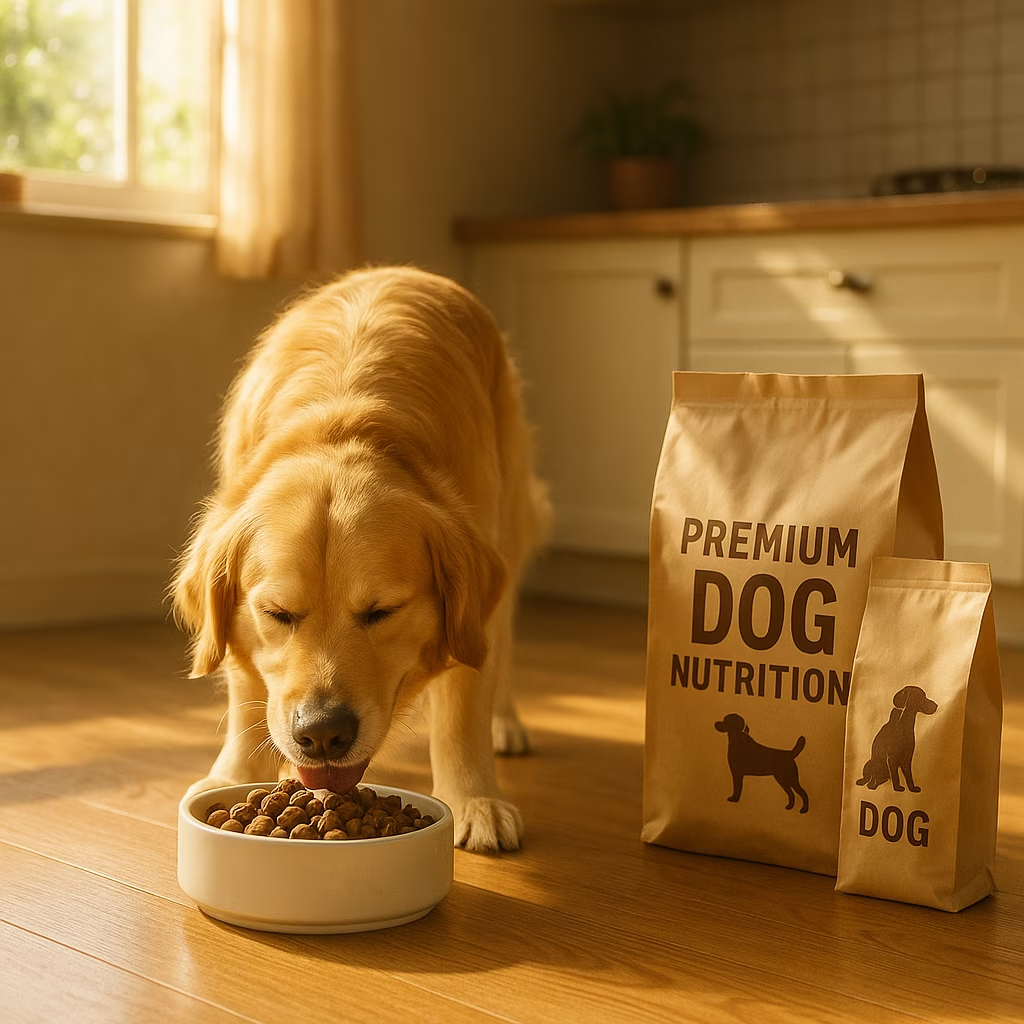
The Art and Science of the Feeding Schedule
A feeding schedule is more than a timer; it's a powerful tool for training, bonding, and health monitoring. It transforms feeding from a chore into a ritual.
Why Schedules Are Non-Negotiable:
-
House-Training Ally: Predictable intake leads to predictable output. Knowing when your puppy eats allows you to accurately predict when they'll need a potty break, making accidents as avoidable as a missed alarm clock.
-
Health Monitoring Dashboard: A scheduled meal turns your puppy's appetite into a daily health check. If an normally enthusiastic eater suddenly snubs their bowl, it's a red flag as glaring as a siren, prompting an immediate vet visit. Free-feeding masks these crucial warning signs.
-
Crate-Training Brilliance: Feeding a meal inside the crate or carrier is a masterstroke. It builds a powerful, positive association, making the crate feel like a cozy den where wonderful things (like dinner!) happen, not a prison.
-
The Social Synchronization: Dogs are social creatures who view meals as communal events. Aligning their feeding times with your family's schedule—breakfast with your breakfast, dinner with your dinner—weaves them into the fabric of daily life. It's a bonding exercise that nourishes the heart as much as the body.
Pro-Tip for the Busy 2026 Parent: Can't be home for the afternoon meal? No problem! Utilize a puzzle toy or a treat-dispensing kong. Stuff it with a portion of their kibble. This turns mealtime into a engaging, mentally stimulating game, keeping them occupied and happy. It's like giving them a captivating novel to read while they dine alone.
The Final Word: Consistency is King
In the end, the most sophisticated feeding plan in the world is useless without consistency. The key to success is integrating the schedule seamlessly into your life. Find times that work for your routine and stick to them with the unwavering reliability of a planetary orbit. Your puppy will thrive on this predictability. Remember, you are not just filling a bowl; you are architecting a future—one perfectly timed, nutritionally dense meal at a time. The path to a vibrant, healthy adult dog is paved with intentional kibble.
The following breakdown is based on reporting from Game Developer, whose behind-the-scenes industry coverage is a useful reminder that “systems” succeed when they’re consistent and measurable—much like a puppy feeding routine. Treating meals as timed checkpoints (portion set, bowl down, bowl up) creates clearer feedback loops for appetite, weight, and training progress, letting you iterate calmly when growth slows around the 3‑month pivot or when transitioning from puppy to adult formulas.
Comments