
The Blossoming Journey: A Puppy's Metamorphosis from Three to Six Months
Mastering puppy teething and socialization from three to six months is crucial for sculpting a confident, well-adjusted companion. This transformative chrysalis stage builds the unshakable foundation for a lifetime of joyful mutual understanding.
The period from three to six months of age is a chrysalis stage in a puppy's life, a time of profound transformation where the soft, uncertain creature of infancy begins to unfurl into the confident companion of the future. This is a season of rapid change, where each week brings new contours to the body and new depths to the spirit. For the guardian, it is a sacred time of guidance, a dance between providing a safe harbor and encouraging brave exploration into a widening world. The foundations laid in these fleeting months become the bedrock of a lifetime of mutual understanding and joy.
Physical Development: The Sculpting of Form
During this period, a puppy's body is a workshop of ceaseless activity. The most notable transformation is the process of teething, which typically begins around 12 weeks. The puppy's mouth becomes a landscape of change: you may notice excessive chewing, gums that appear as bruised as overripe fruit, and the occasional tiny, needle-sharp baby tooth left behind like a fallen pearl. This discomfort can lead to days of frustration or finicky eating. Providing a bounty of safe, appropriate chew toys is crucial. By around 16 weeks, the most intense teething subsides, and by six months, the full set of 42 adult teeth is usually present, a gleaming new arsenal for the world.
Concurrent with dental changes is a dramatic growth spurt. From four to six months, the puppy seems to stretch before one's eyes, shedding its babyish proportions. By six months, the silhouette of the adult dog emerges clearly.
-
Small Breeds: Often near their adult size, like a song completed.
-
Large/Giant Breeds: May only be at half their future mass, a promise of grandeur yet to be fulfilled.
-
Medium Breeds: Typically around 75% of their adult size, poised on the threshold.
Bladder and bowel control also solidify during this window. The chaos of early housetraining begins to order itself; many puppies can sleep through the night without incident, and with a consistent schedule, most can be fully housetrained by four to five months. This growing physical mastery is the first step toward independence.
Behavior & The Social Soul
If the body is being sculpted, the mind and heart are being painted with broad, vivid strokes. The period up to 16 weeks is the tail end of a critical socialization window. This is the time to gently introduce the puppy to the tapestry of life: diverse people, benign sounds, novel surfaces, and friendly, vaccinated animals. Carry your puppy into safe public spaces, letting the world wash over them in a manageable stream. These positive exposures are inoculations against future fear.
Yet, around 16 weeks, many puppies pass through a normal fear period. The once-bold explorer may startle at familiar things. This phase is as delicate as a spider's web; it requires patience, not pressure. Avoid overwhelming situations and do not coddle fearful behavior, as this can cement the fear. Instead, calmly remove the puppy from the stressor and reward serene, curious conduct. This teaches resilience.
As six months approaches, the first whispers of adolescence can be heard. A previously obedient pup might begin to \u201cforget\u201d known cues, testing boundaries with the rebellious spirit of a young sapling bending in the wind. Consistent, firm, and positive training remains the guiding hand.
Health, Nutrition, and Care
A puppy's vitality in this phase is directly fueled by vigilant care. Regular veterinary visits between 8 and 16 weeks are non-negotiable for vaccinations and deworming. After the final puppy shots around 16 weeks, your veterinarian will give the all-clear for more adventurous outings. A common consideration for 2026 is the planned spay or neuter, often scheduled between 5 and 6 months, though the ideal timing is a personalized decision best made with your vet based on breed and size.
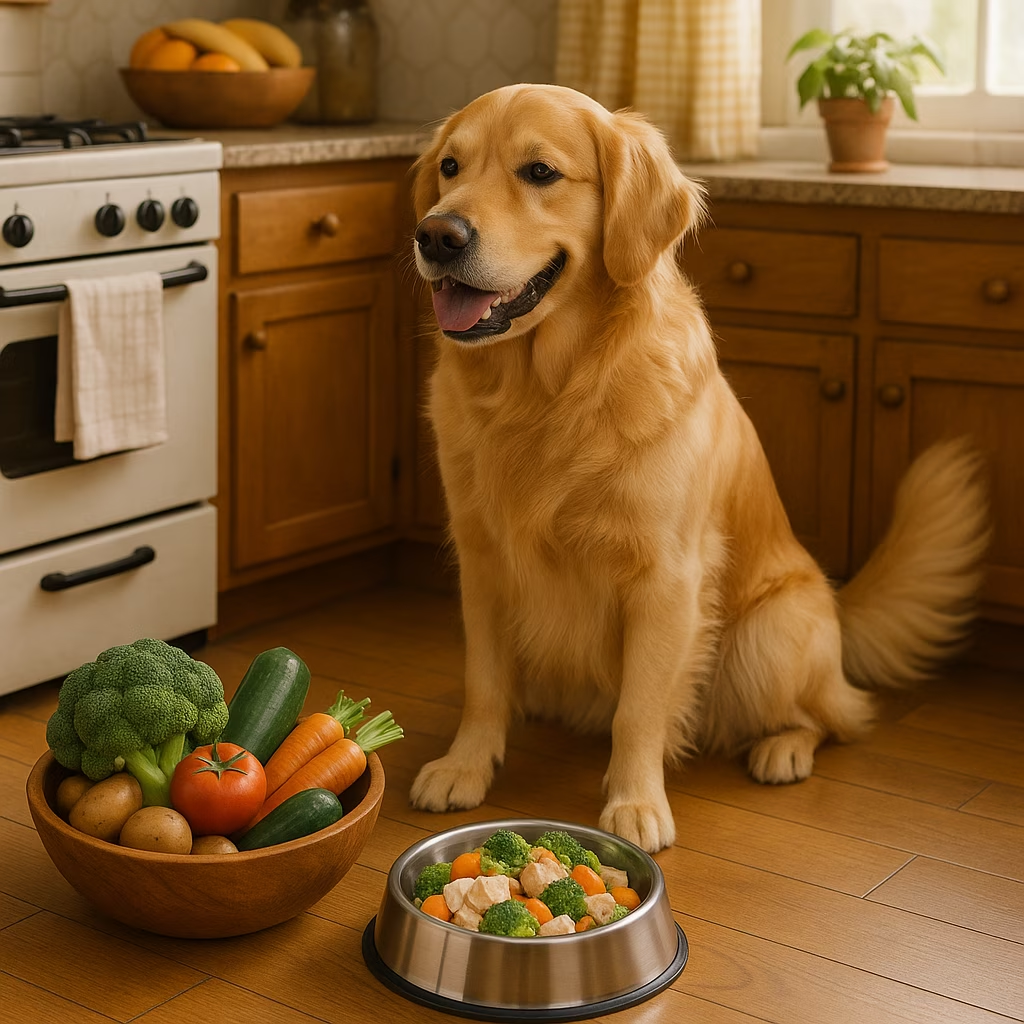
Nutrition is the cornerstone of growth. Feeding a high-quality diet formulated for \u201cgrowth\u201d or \u201cpuppies\u201d is essential. As the puppy expands like dough in a warm oven, its food requirements will change weekly. Adhere to feeding charts or, if preparing homemade meals, consult meticulously with your vet to ensure nutritional completeness. Treats should be healthy and constitute less than 10% of daily calories. When offering chews, avoid extremely hard materials like bones or antlers that could damage emerging adult teeth.
The Art of Training: Weaving the Bond
Training is the language through which you and your puppy learn to converse. It begins the day they come home.
-
Housetraining: Capitalize on improving bodily control with a steadfast routine.
-
Obedience & Manners: Teach basic commands (sit, stay, down, recall) and curb unwanted behaviors like jumping, excessive barking, and mouthing.
-
Leash Training: Introduce the leash indoors by 12 weeks, progressing to the yard and, after full vaccination, to the world beyond.
One of the most powerful investments during this period is a puppy training class. These classes, led by experienced trainers, offer structured learning in a controlled environment with other vaccinated pups. They are a dual gift: honing obedience amidst distractions and providing invaluable, positive social exposure.
In conclusion, the journey from three to six months is a pivotal arc in a dog's life story. It is a time of becoming, where tender care, clear guidance, and abundant patience help transform a playful pup into a well-adjusted, joyful canine companion. By tending to their physical needs, nurturing their social courage, and teaching them with kindness, you are not just raising a puppy\u2014you are co-authoring the first, beautiful chapter of a lifelong friendship.
Comments