
My Life With Alaskan Huskies: Lessons From the Sled Dog Trail
Alaskan husky dogs are intelligent, active hybrids; their athleticism and friendly temperament suit energetic households.
I never expected to share my home with a dog bred to run a thousand miles through Alaska. Then a sleek, whip-smart Alaskan husky named Koda entered my life in early 2025, and by 2026 I have become a full convert. These dogs are not ordinary pets. They are athletes, pack members, and surprisingly easy companions for an active household.
Koda is a medium-sized hybrid, standing about 23 inches at the shoulder and weighing close to 55 pounds. His coat is a thick double layer that sheds snow and dirt. His eyes can look wild when he sees a harness. The Alaskan husky is not a purebred recognized by registries, but that is exactly what makes the breed so fascinating.
Here is a quick snapshot of the breed as I have come to know it:
| Characteristic | Detail |
|---|---|
| Group | Hybrid |
| Height | 20-26 inches |
| Weight | 35-75 pounds |
| Coat | Short to medium, thick double coat |
| Coat Color | Any color or pattern |
| Life Span | 14-16 years |
| Temperament | Friendly, intelligent, active |
| Hypoallergenic | No |
| Origin | United States |
A purpose-built hybrid, not a show dog
The term Alaskan husky is often used loosely for any mixed-breed dog with northern breed traits such as Alaskan Malamute, Siberian husky, Inuit dog, or Greenland dog. In truth, Alaskan huskies were developed with one main goal: creating an extraordinary sled dog. Jaye Foucher, a professional dog musher and breeder, explains that there are specific lines. Distance lines are bred for endurance and cold climates, with thicker double coats and more Arctic genetics. Sprint lines are sleeker, more heat-tolerant, and bred for speed, often carrying genetics from salukis, pointers, and hounds.
Koda comes from a distance line. He looks like a Siberian husky, but he is a little less demanding of affection. Foucher told me that most of her Siberians will get right in her face and lick her senseless, while her Alaskans are not big kissers. Still, Koda is pack-oriented. He hates being alone and greets every human with a wagging tail. He also barks at strangers more than I expected and loves a good group howl.
Living with an athlete
Alaskan huskies were literally bred to run. Koda needs at least one to three hours of aerobic exercise every day, especially in cool weather. I learned quickly that a bored Alaskan husky will find something to destroy. Now our routine includes pulling sports like bikejoring and skijoring. In summer, he slows down because of the heat. On a crisp 10-degree Fahrenheit day, however, he is practically climbing the walls.
Mental stimulation matters just as much. Chew toys, playdates, and open running time keep him settled indoors. Foucher gives her dogs large play yards and sturdy toys such as Kongs during the summer.
Grooming is easier than you might think
Despite the thick coat, grooming is not overwhelming. Koda's fur naturally repels dirt when dry, and he rarely needs a bath. I brush him thoroughly a few times a week. He blows his undercoat about once a year, usually in summer. I trim his nails as needed, usually three to four times a year in colder months. I also brush his teeth daily and check his ears weekly.
Training starts early
Alaskan huskies are intelligent but can be willful. Consistency, patience, and frequent rewards are key. Basic obedience can begin as early as 8 to 12 weeks old. I started leash training Koda at 12 weeks with short walks of a quarter to half a mile, then gradually increased the distance. Early socialization is crucial, especially if there are children or other pets in the home.
For harness work, Foucher waits until her dogs are at least eight months old. The first few months are short and positive. I keep every run fun so Koda associates the harness with excitement, not pressure.
Health and diet
Alaskan huskies are generally healthy and often live 14 to 16 years. However, they can be prone to Alaskan husky encephalopathy, glaucoma, epilepsy, digestive issues, bladder issues, sensitive skin, hypothyroidism, and diarrhea.
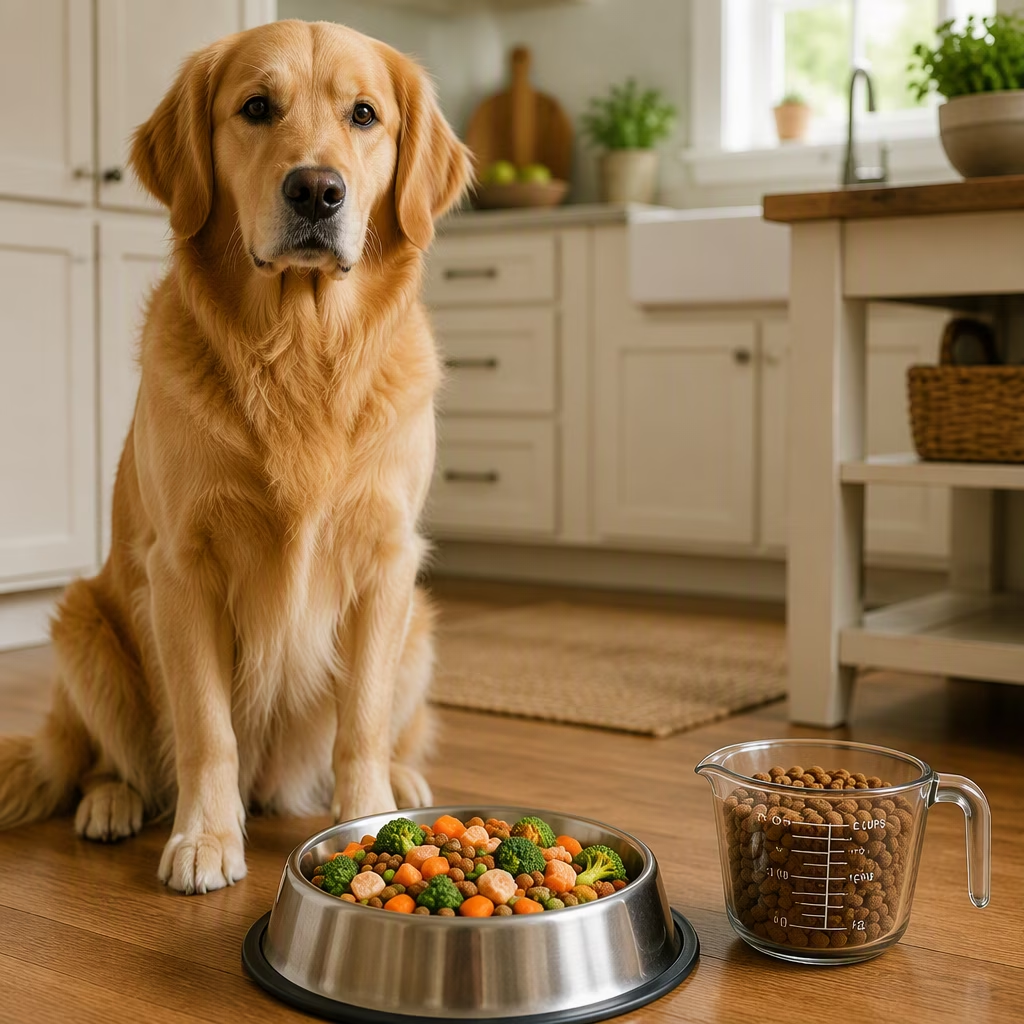
Koda has a high metabolism and needs more calories than many dogs his size. Foucher feeds a kibble formulated for sled dogs with a high fat and protein ratio, often 720 kcal per cup, mixed with raw meat. In summer, her females get about 1.5 to 2 cups per day and males 2 to 2.5 cups. In colder months, the raw meat ratio increases. I follow my veterinarian's guidance and add a joint supplement as Koda ages.
Finding an Alaskan husky
Alaskan huskies are not common in shelters, but you may find them in areas with many mushers, such as the upper Midwest, northern New England, and Alaska. Rescue groups include Arctic Rescue, Northern Lights Sled Dog Rescue, Husky House, Husky Rescue Alaska, Shadow Husky Rescue, and The August Fund for Alaska Racing Dogs.
If you buy from a breeder, expect the price to rise with age and proven ability. A puppy might cost $500 to $700. A yearling can run $800 to $1,000. An experienced sled dog of two or more years often costs $1,000 or more.
Pros and cons
| Pros | Cons |
|---|---|
| Friendly and devoted | Requires extensive daily exercise |
| Fairly easy to groom | Needs mental stimulation or may become destructive |
| Great companion for active families | Not ideal for apartment dwellers |
If an Alaskan husky is not quite right for you, similar breeds include the Siberian husky, Alaskan Malamute, and Samoyed. For me, though, Koda is a perfect fit. He is playful, loyal, and always ready for the next trail. As I write this in 2026, I cannot imagine my active life without him.
Comments