
Max’s Supplement Saga: What Every Dog Owner Must Know in 2026
Dog vitamins can turn a well-intentioned regimen into toxicity, warns a vet; most kibble-fed dogs don't need them.
It was a crisp February morning in 2026 when Alex brought home Max, a bouncy golden retriever puppy with eyes full of curiosity. Like many new pet parents, Alex had done hours of research online and in community forums. He wanted Max to live a long, vibrant life, and soon the idea of adding vitamins to the daily routine began to seem not just thoughtful but necessary. On the kitchen counter sat a growing collection of glossy bottles—omega-3 capsules, chewable multivitamins, even a tub of powdered probiotics—all purchased from a local health store. Yet as Alex read conflicting advice, a quiet unease settled in: What if I’m doing more harm than good?
Determined to get it right, Alex scheduled an appointment with Dr. Sarah Harper, a respected veterinarian known for her holistic yet science-backed approach. In the exam room, Max wagged his tail at the scent of treats while Alex laid out the supplement arsenal. Dr. Harper smiled gently and began a story that would untangle months of confusion.
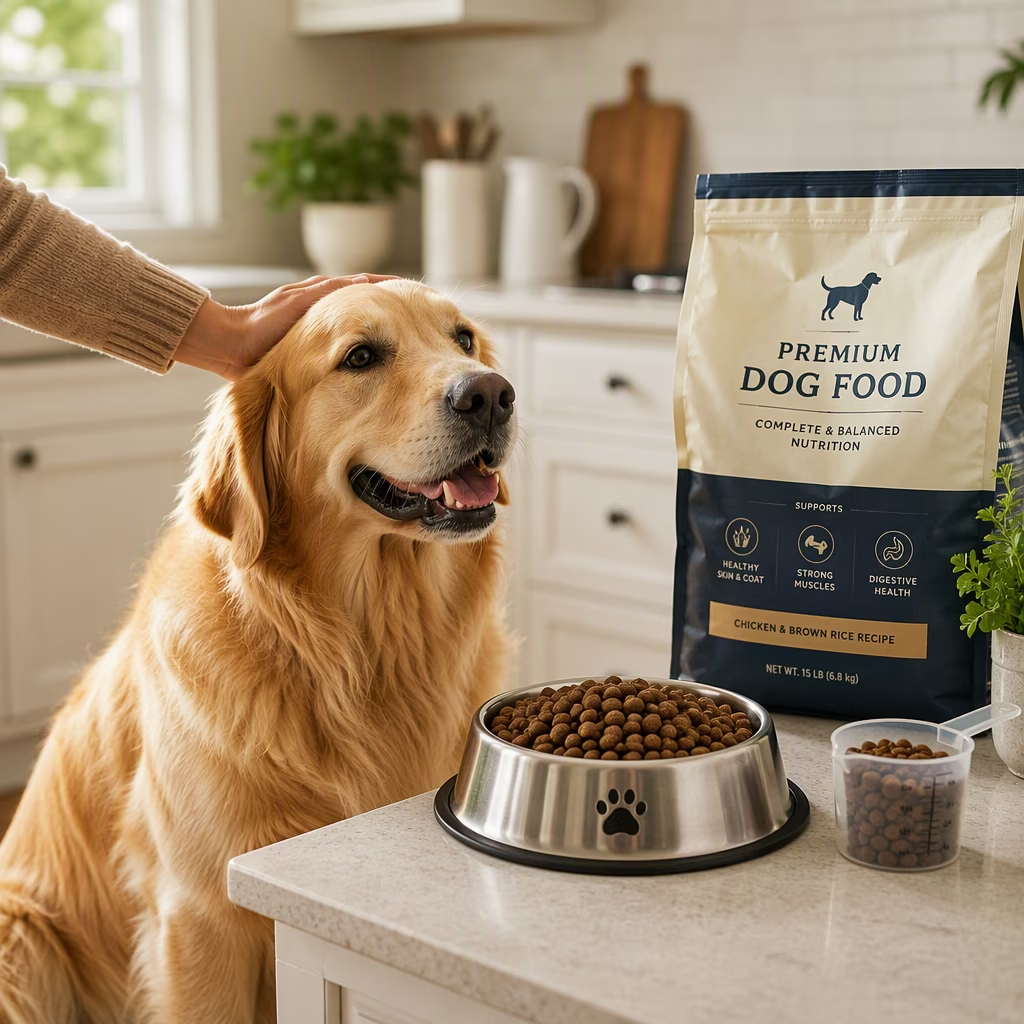
“Most dogs eating a complete and balanced commercial diet don’t need extra vitamins at all,” she explained. She pointed to the AAFCO seal on Max’s premium kibble bag. “This label guarantees the food already has every vitamin and mineral your dog needs—in the right proportions. In fact, high-quality ingredients make those nutrients more easily absorbed. Adding supplements on top can tip the scales into dangerous territory.”
Dr. Harper told Alex about vitamin A, a fat-soluble vitamin that supports a dog’s immune system and metabolism. But when levels surge, toxicity can strike without warning. She listed the grim cascade: loss of appetite, peeling skin, convulsions, paralysis, even death. “That’s why I never recommend random supplementation. It’s like quietly over-salting a perfect soup. You might not notice until the damage is done.”
Alex’s face paled. He had almost given Max a human multivitamin because a friend said it was \u201cnatural.\u201d Dr. Harper shook her head. “Human products often contain inactive ingredients that are toxic to dogs—xylitol for instance, or high doses of iron. The types and amounts dogs need are very different from ours.” She advised that if a multivitamin ever becomes necessary (usually only in cases of diagnosed deficiency), it must be one made specifically for dogs, such as Pet-Tinic or Nutri-Cal, and only under veterinary guidance.
The conversation flowed like a river, branching into common supplement categories. Dr. Harper used the moment to educate Alex about the ones that actually shine when used appropriately:
🐾 Omega-3 Fatty Acids – These aren’t just trendy. They can truly help dogs with joint disease, heart issues, or kidney problems. But not all fish oil is equal. Your vet might prescribe a pet-specific formula like Welactin, which has the correct concentration of EPA and DHA. Random human fish oil may have irrelevant ratios or contain contaminants.
🐾 Joint Supplements – For dogs with arthritis, hip dysplasia, or old injuries, glucosamine, chondroitin, and MSM act as a triple shield. They reduce inflammation and boost joint fluid. Brands like Dasuquin Advanced have earned trust for their consistent quality and palatability. Max was too young for this, but many middle-aged Labs and shepherds find new vitality on such regimens.
🐾 Fiber – Not glamorous, but sometimes essential. Your vet might suggest a fiber supplement to bulk up stools, prevent anal gland issues, or soothe a bout of constipation. It’s always targeted, never a daily sprinkle without reason.
🐾 Probiotics – After antibiotics or during chronic digestive upset, restoring the gut microbiome becomes crucial. Products like Proviable and FortiFlora deliver live, beneficial bacteria in doses proven for canines. A healthy gut often means brighter eyes, shinier coat, and less gas—music to any owner’s ears.
Alex scribbled notes on his phone, realizing how each supplement had a narrow window of true usefulness. The vast majority of dogs, like Max in his healthy puppyhood, simply don’t need them. Dr. Harper added that homemade diets are the exception. “If you ever decide to cook for Max, we must work together—or even involve a veterinary nutritionist—to add precise vitamin and mineral mixes. Tools like special diet-building websites can help ensure the recipe meets all canine requirements. Without that, a homemade stew is just a recipe for malnutrition.”
By the end of the visit, Alex’s perspective had flipped. He was no longer chasing an imaginary perfection but honoring what was already working. He put away the random bottles, replacing anxiety with a simple rule: Under a vet’s supervision only. Dr. Harper gave him a quick checklist for the future:
-
✅ Feed a high-quality commercial diet with AAFCO certification.
-
✅ Only give supplements if your vet diagnoses a deficiency, wants to manage a specific condition, or is guiding a homemade diet plan.
-
✅ Ask your vet about dosing, brand, and duration—never wing it.
-
❌ Never share human vitamins or start a supplement based on internet reviews.
-
❌ Don’t be lured by clever marketing; if your dog is thriving, you’re already succeeding.
As Alex and Max walked out into the afternoon sun, a sense of relief replaced the earlier confusion. Max’s health wasn’t a puzzle to be hacked with pills—it was a bond built on quality food, regular checkups, and informed love. In 2026, with more information than ever at our fingertips, the wisest choice was sometimes the simplest: trust the science and trust your veterinarian. The story of Max is not unique—it’s a quiet revolution in backyards and living rooms everywhere, where owners learn that a wagging tail and a clean bill of health are often enough.
Comments