
How Much Food Does a Dog Need? A 2026 Guide to Calories and Canine Nutrition
Dog food portion sizes and AAFCO guidelines are vital for optimal canine nutrition in 2026's diverse pet food market.
Anyone who has compared notes with another dog owner has likely discovered that feeding routines can look very different from one household to the next. One dog may polish off three cups of kibble a day while another stays fit on a single cup. In 2026, canine nutrition science is more individualized than ever, but the fundamentals have not changed: a dog's ideal portion depends on its age, size, energy output, reproductive status, and overall health. Getting the amount right helps prevent unhealthy weight gain, supports digestion, and keeps a dog's coat, muscles, and immune system in good shape.
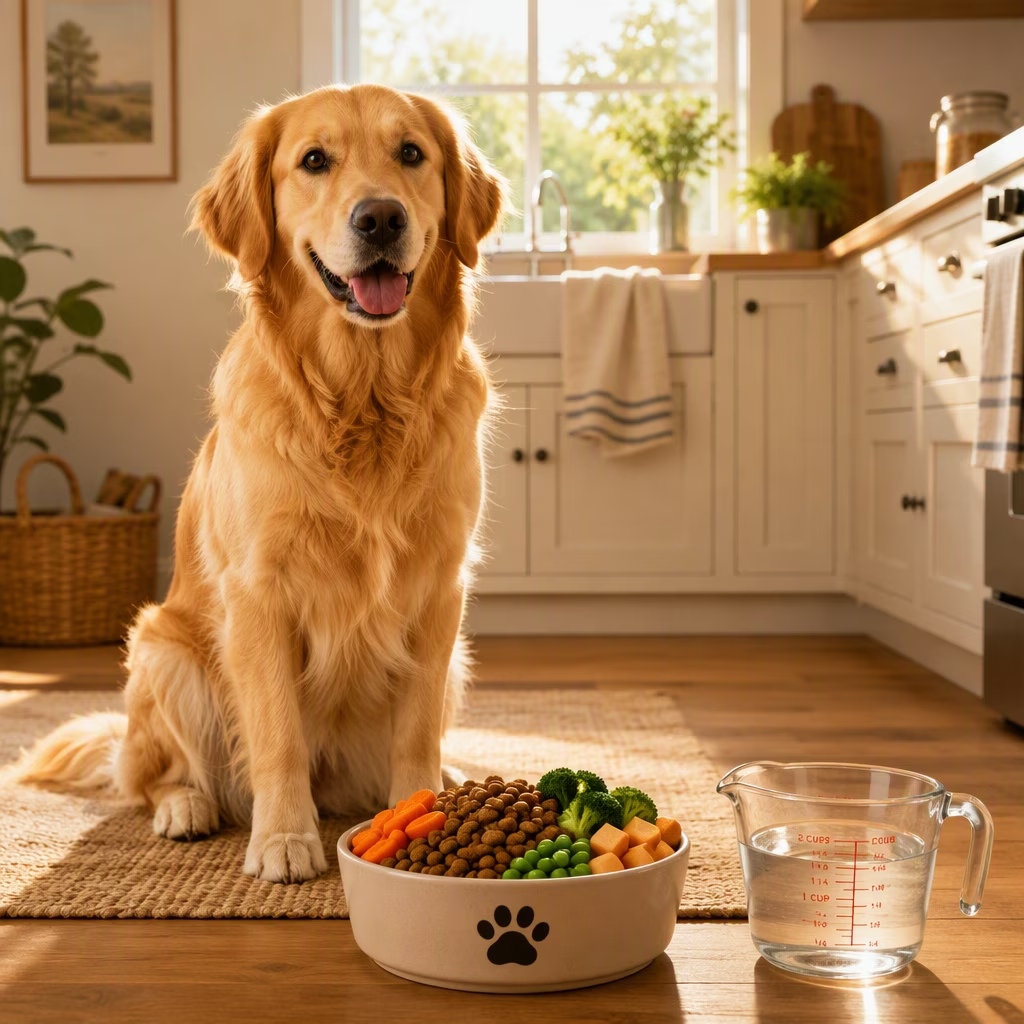
A Wide World of Dog Food Formats
Pet food aisles in 2026 offer far more than a plain bag of kibble. The most common formats include dry kibble, canned wet food, pouched wet food, refrigerated kibble, refrigerated tubes, frozen discs or patties, frozen kibble, freeze-dried kibble, homecooked diets, and raw food. Each format has a different moisture level, calorie density, and shelf life, which means a cup is not always a useful comparison. A dog owner should check the calories per cup or per can rather than assume that all dry foods or all wet foods are the same.
Why AAFCO Guidelines Still Matter
Dogs are omnivores, so they need more than meat to thrive. Fruits, vegetables, and even grains can supply vitamins, minerals, and fiber that a strictly carnivorous diet may lack. In the United States, the Association of American Feed Control Officials, or AAFCO, publishes nutrient profiles that help ensure commercial foods are complete and balanced for a specific life stage. When a label says the food meets AAFCO guidelines, it means the formula has been designed to provide the nutrients a dog needs for growth, adult maintenance, or reproduction.
Some dogs with kidney disease, food allergies, diabetes, or other health problems may need a therapeutic diet that does not follow standard AAFCO profiles. Large and giant breed puppies may also benefit from special formulas that slow down growth and reduce the risk of bone and joint issues.
Calculating a Dog's Daily Calorie Needs
Veterinary nutritionists often begin with a resting energy requirement, or RER, which estimates the calories a dog needs for essential body functions. The calculation is simple:
-
Divide the dog's weight in pounds by 2.2 to get kilograms.
-
Multiply the weight in kilograms by 30.
-
Add 70 to that number.
That result is the RER. Then the calculation is adjusted for activity, reproductive status, and life stage to get the maintenance energy requirement, or MER.
| Dog Profile | RER Multiplier |
|---|---|
| Healthy intact adult | 1.8 |
| Healthy spayed or neutered adult | 1.6 |
| Adult prone to weight gain | 1.4 |
| Puppy between 4 months and 1 year | 2.0 |
| Puppy under 4 months | 3.0 |
For a dog that is very active or spends a lot of time outdoors, the MER may need to be increased or decreased by up to 30 percent depending on how the dog maintains its weight.
Example: a healthy, neutered 50-pound dog. Divide 50 by 2.2 to get about 22.7 kilograms. Multiply 22.7 by 30, which equals 681. Add 70 to get 751 RER. Because the dog is neutered, multiply 751 by 1.6, which comes to about 1,202 calories per day.
Turning Calories into Cups
Once the daily calorie target is known, the next step is to read the dog food label. Most dry foods list the number of calories per cup, while wet foods list calories per can or per kilogram. If a food contains 400 calories per cup, a 1,200-calorie target would translate to about three cups a day. A higher-calorie kibble might require only two cups, while a lower-calorie weight-management recipe might require more volume for the same energy.
Portion size should be treated as a starting point, not a fixed rule. A dog owner can use a measuring cup or kitchen scale and then watch the dog's body condition. If ribs become hard to feel, the portion can be reduced slightly. If the dog starts losing muscle or seems hungry all the time, the portion may need to be increased. Many veterinarians recommend rechecking weight every two to four weeks until the dog is stable.
Special Considerations for Puppies, Seniors, and Health Conditions
Puppies have high energy demands for growth and usually need several meals a day. A puppy under four months old may need about three times its RER, while an older puppy needs about twice its RER. Large and giant breeds, however, should not be pushed to grow too quickly, because overly rapid growth can stress developing bones and joints.
Senior dogs often become less active and may need fewer calories to avoid weight gain, but they still need high-quality protein and other nutrients. Some older dogs do better with smaller, more frequent meals. Dogs with medical conditions such as diabetes, pancreatitis, kidney disease, or food sensitivities should follow a veterinarian's advice, because their nutrient needs may differ from a healthy dog.
Treats and table scraps also count. A good rule of thumb is to keep treats to no more than 10 percent of daily calories and adjust the main meal portion accordingly.
The Bottom Line
There is no universal feeding chart that works for every dog. The right amount of food is based on body weight, activity level, neuter status, life stage, and overall health, and it changes over time. A dog owner can start by calculating the dog's calorie needs, choose an AAFCO-complete food for the correct life stage, and then adjust portions based on weight and body condition. A veterinarian or board-certified veterinary nutritionist can offer extra help for dogs with specific health needs.
Comments