
A Puppy's First 8 Weeks: Your Complete Guide to Their Incredible Journey from Newborn to Explorer
Experience the extraordinary puppy development and socialization journey, as your furry friend transforms in the first eight weeks of life.
Hey there, fellow dog lover! So, you've got a litter of puppies or you're bringing home a new furry friend soon? Let me walk you through those magical, whirlwind first eight weeks. It's absolutely mind-blowing how much these little guys change in such a short time. From helpless, blind newborns to curious, wobbly-legged explorers, their development is nothing short of a miracle. Trust me, understanding this journey is key to setting them up for a happy, healthy life. It's a rollercoaster of growth, and being prepared makes all the difference.
Physical Development: The Incredible First Transformations 🐾
For the first two weeks, life is pretty simple for a pup: sleep, eat, repeat. They're like tiny, furry potatoes! Their eyes are sealed shut, and their ears are closed. But around that 10 to 14-day mark, get ready for some magic. Their eyes start to open! Now, don't expect perfect vision right away. At first, it's just a little slit, revealing those gorgeous, hazy grayish-blue eyes we all adore. Full, clear vision doesn't develop until they're about 8 weeks old. It's a gradual process, so be patient.
Their hearing kicks in around the same time, generally between 12 to 14 days old, but it keeps fine-tuning until they're about 5 weeks. Mobility is another huge milestone. For the first two weeks, they can't support their own weight, so they do this adorable belly crawl, paddling and pushing to build strength. They'll start getting up on their front legs around 5 to 6 days, use their back legs by 2 weeks, and then... the big moment! Around 18 to 21 days, you'll see those first wobbly, unsteady steps. It's the cutest thing you'll ever see, I promise.
Here's a quick timeline of those major physical firsts:
| Milestone | Typical Age Range |
|---|---|
| Eyes Begin to Open | 10 - 16 Days |
| Ears Begin to Open | 12 - 14 Days |
| Starts Using Hind Legs | ~2 Weeks |
| Begins Walking | 18 - 21 Days |
| Full Vision Developed | ~8 Weeks |
| Full Hearing Developed | ~5 Weeks |
And let's talk about teeth! They're born gummy, but those sharp little baby teeth (or "milk teeth") start popping through between 3 and 4 weeks, finishing up around 8 weeks. This is a sure sign weaning time is coming.
Behavior & Socialization: Becoming a "Real" Dog 🐶
This is where it gets really fun. After about 14 days, as their senses wake up, a whole new world opens. By 3 weeks, they're not just eating and sleeping machines anymore; they're little explorers starting to learn what it means to be a dog. This is the absolute foundation for their future personality.
The critical socialization window is between 4 and 7 weeks of age. This is the golden, cannot-miss period for introducing them to new people, sounds, and gentle experiences. It's all about building a friendly, confident, and secure adult dog. Seriously, this is non-negotiable for a well-adjusted pup.
-
Meet Everyone! Have them gently meet people of all ages, sizes, and appearances (with hats, glasses, beards, etc.). This includes calm, supervised children who know how to be gentle.
-
Positive Exposure: Introduce them to common household sounds (vacuum, TV, doorbells) at a low volume.
-
Littermate Learning: They learn vital doggy manners—like bite inhibition—by playing with their mom and siblings. Never separate them too early!
A heads-up: around 7 to 8 weeks, the first "fear period" often begins. Puppies might suddenly seem scared of new things. Introducing them to a wide variety of positive experiences before this period can make this phase go much more smoothly. It's like giving them a confidence booster shot!
Health, Care & The Weaning Process 👩⚕️
For the first few weeks, Mom is the MVP, handling almost everything. Newborns can't even go to the bathroom on their own! Mom stimulates them by licking. If you're caring for an orphan, you'll need to mimic this with a warm, damp cloth. They usually gain this control themselves around 3 to 4 weeks.
Vigilance is key. These early weeks are a vulnerable time. Keep a close eye on the whole litter. If one puppy isn't growing at the same pace as its siblings, or shows any subtle sign of illness (lethargy, not nursing), it's vet time, ASAP. Better safe than sorry.
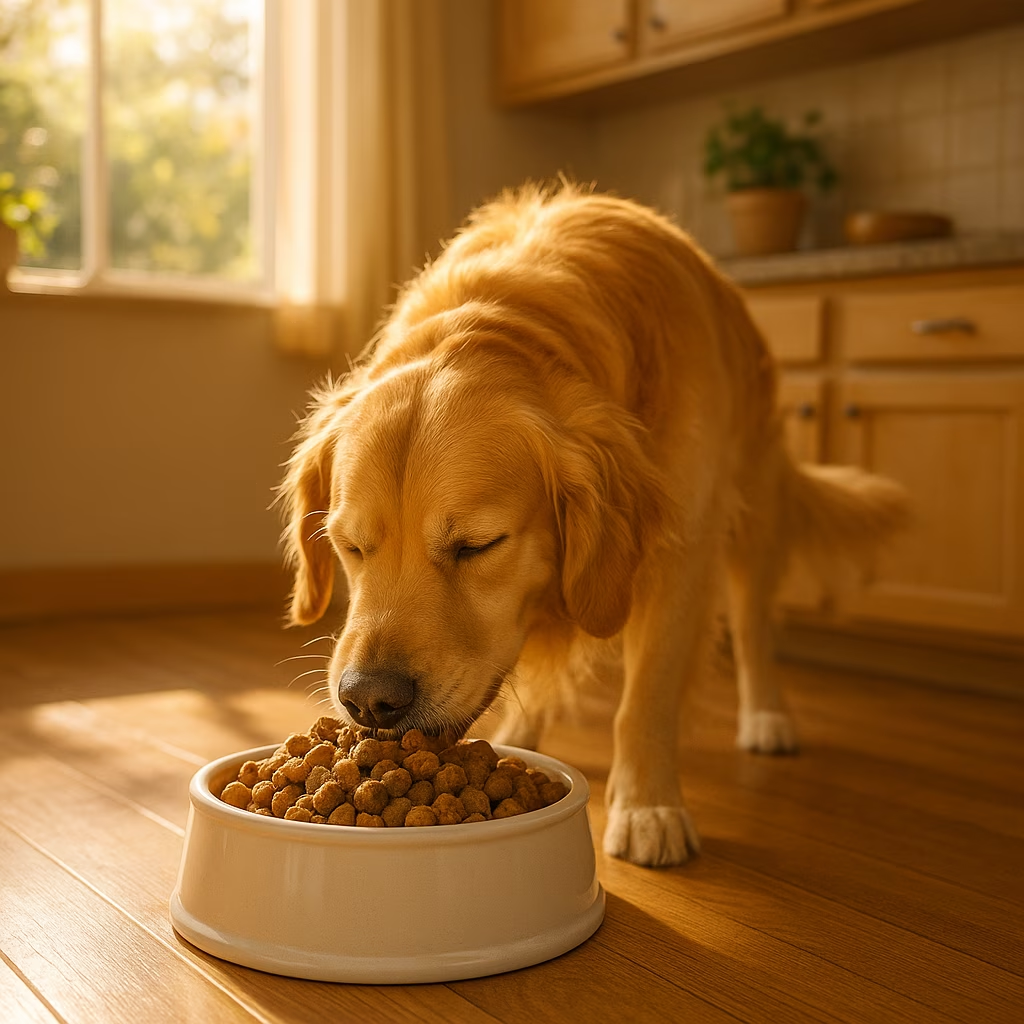
Now, onto food! For the first three weeks, it's all about mom's milk (or a puppy formula if orphaned). Weaning begins around 3 weeks old, often prompted by those new puppy teeth nipping at Mom. Here's how to transition:
-
Offer a high-quality canned puppy food or kibble softened with warm water or formula.
-
Let them explore! You can encourage them by offering a tiny taste from your finger.
-
As they eat more solid food, they'll naturally nurse less.
-
Most pups are fully weaned by 6 to 8 weeks. Mom's job starts to wind down, and the pups become more independent, often wandering from the nest. Using an exercise pen is a great idea to keep them safe.
Laying the Groundwork for Training 🏆
You might think training starts much later, but you can lay the foundation surprisingly early!
-
1-3 Weeks: Too young. Focus on health and letting Mom do her thing.
-
3-4 Weeks: Now they can see, hear, walk, and potty on their own. Their brains are developing fast! This is when you can start very gentle introductions.
-
Crate Introduction: Make the crate a happy, cozy place with soft bedding. Leave the door open and let them explore it voluntarily.
-
Potty Training Basics: Start associating a specific potty area. While they won't be fully reliable, you're building a routine.
Remember, even if puppies are going to their forever homes between 8 to 12 weeks, the work you do in these first weeks is priceless. You're shaping a confident, social, and well-started little companion. It's hard work, but oh boy, is it worth it. Watching a puppy grow through these stages is one of life's greatest joys. Here's to your amazing puppy-raising adventure!
Comments